Why Every Organization Needs Future-Ready Leaders

Written by Catalyze
11/08/2026
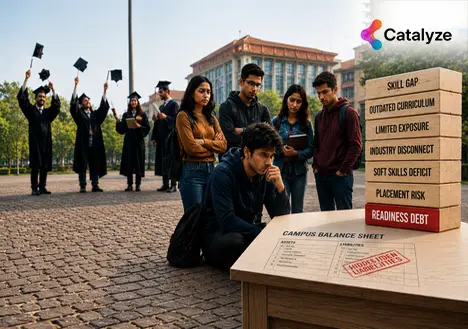
Graduating from college is an exciting milestone, but earning a degree is only the beginning of a professional journey. Today, employers look beyond academic achievements to find candidates who communicate effectively, adapt to change, solve problems, and collaborate with diverse teams.
Career readiness bridges the gap between classroom learning and workplace success. It equips individuals with practical competencies, professional etiquette, and real-world exposure that support a confident transition into professional environments.
Understanding Campus-to-Corporate Readiness
Campus-to-Corporate Readiness is a structured approach that prepares students for the realities of the professional world. It goes beyond textbooks and examinations by focusing on essential competencies such as communication, leadership, teamwork, adaptability, emotional intelligence, and problem-solving.
The objective is not simply to help students secure employment but to prepare them for long-term career growth and leadership opportunities.
Bridging the Gap Between Academics and Industry
While academic education builds subject expertise, the workplace demands practical application, collaboration, and adaptability. Experiential learning helps students develop the confidence and skills required to transition smoothly into professional environments.
Interactive workshops, mentoring sessions, mock interviews, and collaborative projects provide exposure before entering the workforce.
Developing Essential Employability Skills
Strong employability skills empower students to navigate workplace challenges with confidence while demonstrating professionalism, accountability, and adaptability.
These essential competencies enhance employability and lay the foundation for sustainable career growth and Career-Ready leadership opportunities.
The Role of Institutions in Career Readiness
Educational institutions play a critical role in shaping Future-Ready professionals. By integrating leadership development, industry interactions, internships, career mentoring, and skill-based learning into academic programmes, colleges can create graduates prepared to meet evolving business expectations.
Strong partnerships with industry leaders help bridge the gap between education and employment.
Why Industry Exposure Makes a Difference
Learning extends beyond classrooms. Live projects, internships, guest lectures, business simulations, and interactions with industry leaders provide valuable insights into real workplace environments.
A future-focused learning environment nurtures confidence, resilience, and lifelong learning while building rewarding careers and meaningful contributions.
Conclusion
Career readiness is more than preparing students for their first job—it is about preparing them for lifelong professional success. By combining academic excellence with practical skills, leadership development, industry exposure, and continuous learning, institutions can equip graduates with the confidence to excel.